Posts

New form MGT-6 w.e.f. July 15, 2024

Image
Only a natural person can be a beneficial owner while reporting e-form MGT-6? It seems so from MCA recent notification on this. MCA has introduced new MGT-6 e-form (" MGT-6 ") on 15th July 2024 which is web-based form. The purpose of MGT-6 is to report details of persons who is registered owner and beneficial owner respectively by a company. There are scenarios where there is a need to file this MGT-6. One of such scenarios is when a company incorporates wholly owned subsidiary (Say, private limited company). This means total shares held by holding company. But, you may know that minimum two members are required in a private limited company. So in such case, holding company nominates a person (say, its employee) to hold share for such statutory requirement whereas beneficial interest in such share is held by holding company only. So, this is a brief background of MGT-6. There are two attachments to this MGT-6 which are submitted to a company: MGT-4 : This is submitted by reg...

AYODHYA JUDGEMENT-SUMMARY

Image
Ayodhya judgement resolved the long pending tussle  between Hindus and Muslims. Resolving this religious fight was not an easy task for Hon'ble Supreme Court (" SC "). Drawing  evidences from the muted history were the most herculean task for the SC, though observations of High Court was very much helpful for the SC to end this religious fight which started from 1856-7 . Writing crux of this judgement was not any easy task for me as well because this judgement spreaded over 1045 pages   and discussed numerous issues  and when I was reading and making summary, the problem before me was what to include or what not? But to reduce this judgement into readable strength, I mainly focused on core question which was the bone of contention.  Further, for the sake of authenticity I have written page numbers of this judgement against paragraphs ( wherever required ) so that you can cross-verify or read in detail if you feel so. The bone of contention before the SC was...

LEGALITY OF THE DECREE FOR PARTITION BY THE HIGH COURT-AYODHYA JUDGEMENT-BY CS ROHIT KUMAR

Most of the readers are aware that Hon'ble Allahabad High Court (the " HC ") directed to divide the disputed land into three equal parts to the Muslim, hindus and Nirmohi Akhara . But the HC forgot that none of the suits filed in past were related to partition because:  (i) a suit   by a worshipper [ Gopal Singh Visharad ] seeking the enforcement of the right to pray at Ram Janma Bhumi  (Suit 1) ;  (ii) a suit by Nirmohi Akhara asserting shebaiti rights to the management and charge of the temple (Suit 3) ;  (iii) a declaratory suit on title by the Sunni Central Waqf Board and Muslims ( Suit 4 ); and  (iv) a suit for a declaration of title to disputed premises by the deity (" Bhagwan Shri Ram Virajman ")  and the birth-place (" Asthan Shri Ram Janam Bhumi, Ayodhya ") through next friend in which an injunction has also been sought restraining any obstruction with the construction of a temple ( Suit 5 ). HC granted the relief which were not the subject...

CANCELLATION OF SALE DEED DUE TO NOT HOLDING BOARD MEETING -CASE LAW-DECODED-CS ROHIT KUMAR

Image
M ost people consider Boardroom  a picnic spot, and attending or holding board meeting is considered as a time-pass compliance process by most of the listed and unlisted companies. But, let me tell you board meeting minutes is one of the most important evidences of company's proper functioning, and the Courts also rely on papers of board meeting be it directors notice, attendance register, minutes etc. NOT HOLDING BOARD MEETING COULD RESULT INTO LAND DEAL CANCELLATION This case happened when NCLT declared the sale to be null and void in oppression & mismanagement case [ Elaine Info Solution Pvt. Ltd. v. Avenues India Pvt. Ltd. & others ] and the same uphold by NCLAT . FACTS OF THE CASE: Appellant : Elain Info Sol Pvt Ltd. ( A1 ) Respondents : J&A Avenues India Pvt Ltd ( R1 ) | Mrs. Vishnumolaka Govardhanamma ( R2 ) | Mr. V. Lakshmi Chenuchu Venkata ( R3 ) | Sub-registrar ( R4 ) R2 and R3 are the only directors of R1, and R2 is mother of R3. R3 held 50% shareh...

CLOSE WATCH OVER INVESTMENT FROM CHINA-DECODED-CS ROHIT KUMAR

Image
As we are aware that after COVID-19 share prices of most of Indian Companies are trading at very low price and China wants to acquire shares of such companies at low price to control most of Indian Companies. Therefore, Government of India has reviewed the extant FDI policy for curbing opportunistic takeover/acquisitions of Indian companies and accordingly amended para 3.1.1 of Consolidated FDI Policy 2017. REVISED POSITION : A non-resident entity can invest in India, subject to the FDI Policy except in those sectors/activities which are prohibited. However, an entity of a country, which shares land border with India or where the beneficial owner of an investment into India is situated in or is a citizen of any such country, can invest only under the Government route. Further, a citizen of Pakistan or an entity incorporated in Pakistan can invest, only under the Government route, in sectors/activities other than defence, space, atomic energy and sectors/activities prohibited for fore...

DRAFT VALUERS BILL 2020- A NEW ERA OF VALUATION-LAW DECODED-BY CS ROHIT KUMAR

Image
WHY NEED ARISE OF NEW PROFESSIONAL, A VALUER? As of today, there is neither standardised formula for valuing assets of corporates nor proper regulatory framework  governing the valuation professionals which are very important to unlock the real value of assets. Currently, there is an ad-hoc framework for valuation professionals and they are basically governed under Companies Act, and IBBI is empowered to implement regime of registered valuers.  For long, such valuation services are provided by CA & Merchant Bankers under various legislations such as Companies Act, Income Tax Laws, SEBI, FEMA etc in a non-standardised manner involving high degree of subjectivity of valuer which most of the time resulted into mis-matching between reality & excel figures .  Moreover, a valuation can not be a part-time services for CS or CA. This requires altogether different set of skills which are beyond Accounting, Tax, and Excel Sheets. Therefore, the panel headed by IBBI Cha...

RED TAPISM CASES IN INDIA: IDEA-VODAFONE MERGER-LAWDECODED-CS ROHIT KUMAR

Image
Indian Government has very good track record of killing our own country growth by taking stupid decisions. Our bureaucrats have taken oath not to learn from their past bad decisions. In this article, we will discuss how our Indian bureaucracy efforts are anti-growth. HOW STORY OF RED TAPISM STARTED? Idea-Vodafone merger was quite famous and it was said that this would help to boost Vodafone earning which have been showing very dismal picture. To go through this merger process, this deal had to navigate various regulatory windows and Department of Telecommunication (DoT) was one them. Such kind of departmental approval is required in big transactions. Our government departments are well equipped to squeeze, and they did in this case as well. DoT approved the merger but put one rider that merged entity would pay $1.1 Billion to Government in the name of Spectrum charges which was the source of the dispute between government & Idea-Voda (merged entity) to meet their fis...

WHY YOU SHOULD FILE ITR-DECODED-BY CS ROHIT KUMAR

Image
Why you must file ITR Most people incur losses or their income does not exceed basic basic exemption limit, so they think there is no need to file ITR but this notion is wrong. Everyone must file ITR because of following reason. WHY YOU SHOULD FILE INCOME TAX RETURN 1. If you do not file ITR then you can not carry forward of your losses. Carry forward of losses means that taking losses in the next year, and if you have any income next year then you may set off your previous year loss against such income.  For Example, in current year you did trading in share market and incurred a loss of Rs. 2 Lakhs but in next year your income from share market is Rs. 3 Lakhs, then first you should reduce last year loss from this income then you shall pay tax on balance amount i.e. Rs. 1 Lakh [3 Lakh - 2 Lakhs] . 2. Sometime various purposes you need last 3 or 4 years ITR such as taking credit card, applying for bank loan, passport etc. Therefore, even if you do not have any income, s...

IMPACT OF COVID-19 ON INDUSTRIES-DECODED-BY CS ROHIT KUMAR

Image
Gravity of COVID-19 outbreak is being felt across the globe. Since nobody has ever imagined such a situation, so preparing to fight against it seems quite difficult. For Government, to continue with lockdown or managing economy, becomes a mutually exclusive decisions. Every economic sector is finding itself difficult to navigate through such a tough time and running a country is literally like chewing glasses. But, this unprecedented situation will definitely change the rules of doing business and will help some sectors to enter into boom phase when the dust settles. So, let's discuss the impact of COVID-19 on various sectors: 1. TEXTILE SECTOR: After agriculture, textile is biggest employment generator in Indian economy. This pandemic hit this sector at a time when the sector is facing sluggish growth with wafer-thin margin. Eleven countries buy 41 % of India's cotton yarn and these countries have reported COVID-19 cases [ According to Cotton Textile Export Promot...

HOLDING COMPANY & SUBSIDIARY COMPANY RELATIONSHIP-LAW DECODED-BY CS ROHIT KUMAR

Image
Holding-Subsidiary Company Relationship In this article, we will discuss the various criteria which create holding and subsidiary relationship between two companies. Understanding holding-subsidiary relationship important to know status of related parties between two companies and to consolidation of books of account. DEFINITION UNDER COMPANIES ACT, 2013 Section 2(46) defines, "holding company", in relation to one or more other companies, means a company of which  such companies are subsidiary companies; Explanation:- For the purpose of this clause, the expression  "company"  includes any body corporate;] To understand this definition, we need to look subsidiary definition as well which is given u/s 2(87) : " subsidiary company " or " subsidiary ", in relation to any other company (that is to say the holding company), means a company in which the holding company— (i) controls the composition of the Board of Directors; or (ii) exercises or contr...

WINDING UP UNDER COMPANIES ACT 2013 AFTER IBC-DECODED-BY CS ROHIT KUMAR

Image
Winding up of Companies after IBC In this article, we will discuss how the provisions or route related to winding up of companies changed after the introduction of the Insolvency & Bankruptcy Code 2016 (the " IBC " or " Code ") because before the enactment of IBC, winding up of companies was under purview of Companies Act 1956 2013 .   HOW IBC CHANGE THE SCENARIO OF WINDING UP OF COMPANIES? Before the enactment of IBC the term Winding up was not defined in the Companies Act, 2013 as well as 1956. It was November 15, 2016 when section 255 of the IBC was notified which caused so many changes in Companies Act, 2013 ( through XI schedule ) and introduced new section 2(94A) in the 2013 Act to define the term Winding up as follows: "winding up under this Act or liquidation under Insolvency and Bankruptcy Code, 2016" It means after November 15, 2016 winding up of the companies  shall be governed by both laws. Now the important question is how both Acts shall...

BOOK REVIEW-IND-AS BALANCE SHEET-CS ROHIT KUMAR

Image
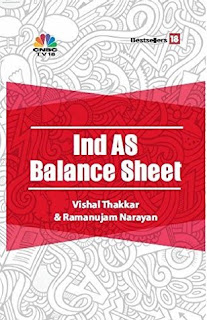
I am going to share the book review of Ind-AS Balance Sheet by Vishal Thakkar & Ramanujam.This book is about the latest accounting standards which are being implemented in India across various sectors. Overview This book is very basic about new set of accounting standards i.e. Ind-AS. Author just touched the various concept spread across various standard very briefly except few. This book is written for layman or persons who have not much accounting knowledge.  Plus Points  Simple language. Topics divided into very small part for easy understanding. Very small book comprising of 276 pages. A separate list of accounting terms have been defined in easy manner. Minus Points Not good for professionals Experts can not even have for quick reference because book has not been written in that way. Conclusion: You may this book if you have very little knowledge of accounting, else this will not be of much help in your professional life.

DIRECTOR'S INTEREST-COMPANIES ACT-DECODED BY CS ROHIT KUMAR

Image
In this article I will discuss, when disclosure from a director is required under section 184 of the Companies Act, form MBP-1, and concept of interested director. CONCEPT Taking disclosure is quite logical because when the matter or any material contract is discussed at the board meeting then every director must be aware that who is interested in particular agenda item and must check the conflict of interest. PROVISIONS OF SECTION 184: Every director must disclose his interest in any contract or arrangement at the Board Meeting in which such contract/arrangement is being discussed. Such disclosure shall be given in Form MBP-1 .  If any director is interested in any such contract, then he shall be prohibited from participating in such meeting. [ Private limited company is exempted from this , Notification dated 5th June 2015 ] TRIGGER POINT TO DISCLOSE INTEREST? First meeting of board in which he participates as a director. Thereafter, at the first meeting of every financial y...

NIFTY AND YOUR HEART BEAT-DECODED-CS ROHIT KUMAR

Image
I am quite sure that most of you must have heard this name NIFTY or SENSEX whenever you read stock market-related news and few of you who invest in the stock market always keep your hear beat up and down with NIFTY up and down movement. And this is quite logical because after all, you have invested your hard-earned money into an unknown company. But if you among those who have not invested even a single penny in the stock market then you you do not need to worry.  Having said that I would say people do get panic when NIFTY falls. They start linking it with poor economic performance but measuring economic conditions solely on the basis of NIFTY or SENSEX is not a wise thing to do. What is NIFTY in the Stock Market? It is just an Index of the top 50 companies share prices which are listed on the National Stock Exchange (NSE) . In simple terms, NIFTY is made up of these 50 companies and whenever there is fluctuation even in single company share price NIFTY moves ...

LOAN AND INVESTMENT BY COMPANY

Giving Loans and making Investment is quite common in big companies because there is always a tendency of routing of funds from one entity to another. Therefore, knowing proper compliances is inevitable, else your company can be caught up by the regulator. Here is a brief process you must follow while giving a loan or making the investment:

PRIVATE LIMITED COMPANY Vs. PUBLIC LIMITED COMPANY

Though both private limited and public limited are registered as a company under the Companies Act, 2013, there are some subtle differences which distinguish one from another. You can notice the difference on the basis of followings points:

TDS(TAX DEDUCTED AT SOURCE)

TDS means Tax deducted at Source. It is the amount withheld from payment of various kinds such as salary, contract payment, commission, etc. This withheld amount can be adjusted against your tax due.

UNIQUE FEATURE OF SPICe+ FORM FOR COMPANY INCORPORATION

SPICe+ FORM provides the following services viz. 1. Incorporation 2. DIN allotment 3.Mandatory issue of PAN 4. Mandatory issue of TAN 5. Mandatory issue of EPFO registration 6. Mandatory issue of ESIC registration 7. Mandatory issue of Profession Tax registration(Maharashtra) 8. Mandatory Opening of Bank Account for the Company and  9. Allotment of GSTIN (if so applied for).

ILLEGAL ASSOCIATION

Section 464 of Companies Act, 2013 defines  that no association or partnership consisting of more than 50 persons  [fixed vide rule 10 of Misc Rules 2017] shall be formed to carry on any business for gains unless it is registered under the companies Act 2013.

STAMP DUTY ON SHARE CERTIFICATE

Few Important points regarding stamp duty on share certificate: 1. Stamp duty is payable on issue price not on the value of the security. 2. In a case of a large number of shares, stamp duty can be payable in a lump sum and this fact should be mentioned on share certificate. 3.  STAMP DUTY ON SHARE IS STATE SUBJECT BUT STAMP DUTY ON DEBENTURE IS UNION SUBJECT . 4. The company should pay the stamp duty according to the state in which the registered office of the company is situated, not in the state where Board Meeting is held to consider an issue of shares. 5. One issue is whether the stamp duty is  payable on duplicate/split share certificate  or not. Section3 of the Indian Stamp Act states that every instrument mentioned in the schedule of the Indian stamp act which, not having been previously executed by any person is executed in India; shall be chargeable with stamp duty of the amount indicated in  schedule I . 6. Stamp duty is payable on a fa...